
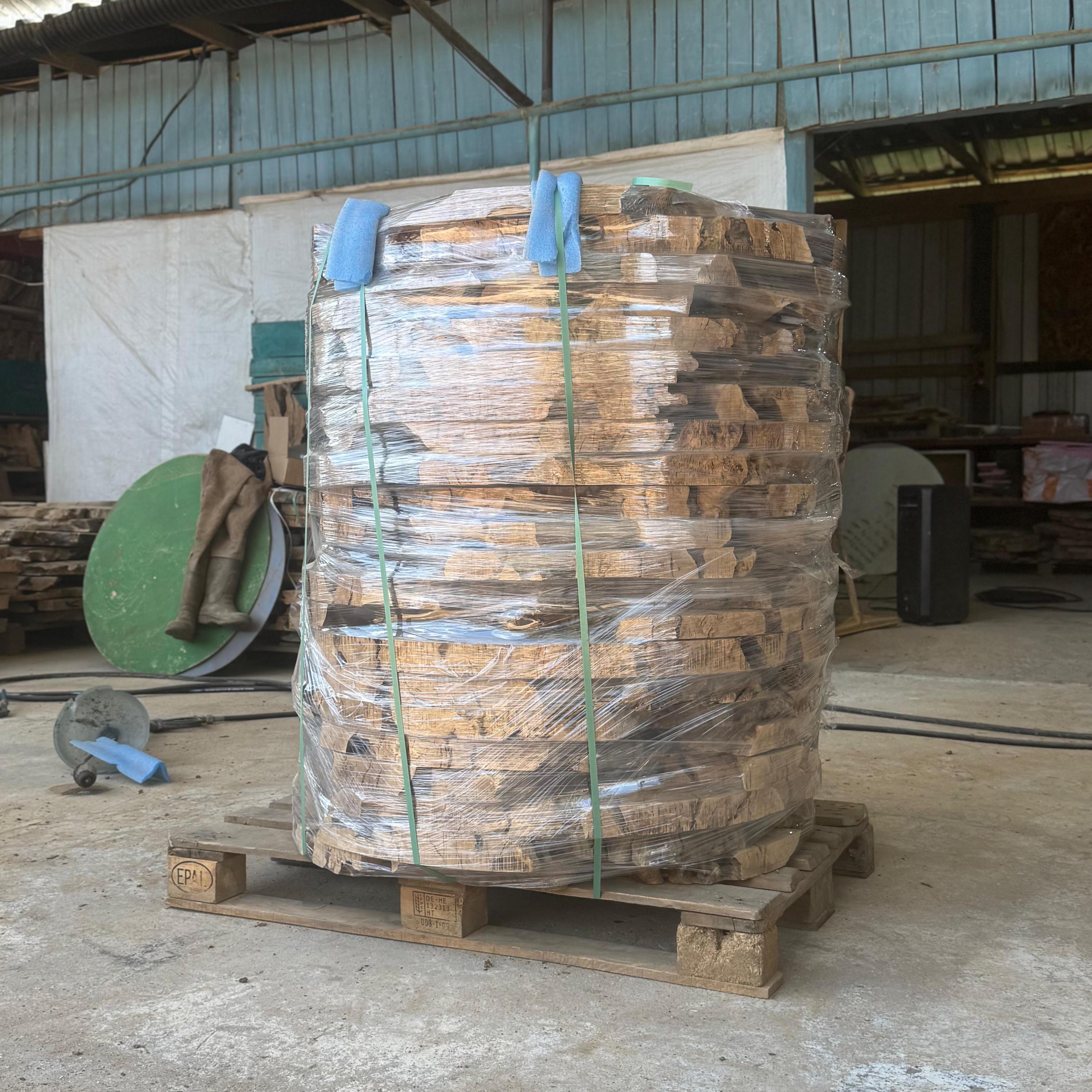
A first wholesale olive wood order for resale should help you learn what your customers actually buy. Choose a focused assortment, define each resale unit clearly and record the response to each product group. The aim is to make the next order more informed than the first. OliveWoodSlab supplies material formats including river sets, root slices and larger slabs. A woodworking store, a resin-supply business and a furniture-material specialist may need different selections. Start with the projects your customers make, then use our olive wood catalogue to identify relevant formats for a trade enquiry.
Which product groups belong in the first order?
Give each group a clear customer and use. Two-piece river sets can be presented around a defined resin-project format. Root slices can be organised by usable size and outline. Larger slabs may need individual photographs and a more detailed conversation about the intended furniture project. A practical first range might contain two or three clearly distinguished groups rather than many overlapping options. For each group, write one sentence explaining who it is for and what the buyer receives. If that sentence is difficult to write, refine the product grouping before increasing its quantity.
How do you decide the quantities without sales history?
Start with enquiries you already receive, the formats your customers can work with and the space available in your store. Ask which products complement what you already sell. Keep an experimental group separate from material intended to meet a known request. For a planning example, a store might divide a trial order into river sets for existing resin customers, smaller slices for a new display and a few individually selected larger pieces. Assign quantities after checking the proposed cost, the selling space and the attention each group needs. No fixed mix suits every retailer.
What should the customer-facing product information say?
- Whether the price is for one piece, one set or a larger pack.
- Measurements with units and an explanation of irregular dimensions.
- The preparation and surface condition supplied.
- Whether the photo shows the exact item or a representative example.
- Any selection steps and what additional work the project needs.
Keep sets together and give each stock unit a reference. Use your own photographs of received stock, or obtain permission for supplier images before using them in your shop. Our exact-piece and example-photo guide helps you describe the selection method consistently.
What should you measure before reordering?
Track how many units you received, how many sold, the time taken to sell them and the questions customers asked. Note preparation work, display effort and any remaining pieces that do not fit your customers' projects. Review those records by product group rather than only looking at total revenue. If one size attracts enquiries but few purchases, ask whether the issue is the price, unclear information, the available outline or a mismatch with the intended project. Use the answer to revise the next assortment. A slower group can teach you something different from a group nobody noticed.
What should you include in a wholesale enquiry for resale?
Tell us what kind of store you operate, who your customers are and which wood formats you want to test. Add the proposed quantities, preparation requirements and delivery destination. If you expect future orders, describe that plan separately from the initial purchase. Request a wholesale assortment for your store, using our wholesale order specification guide to organise the details. We can discuss the available material against your proposed range and help clarify the product information needed for the order.