
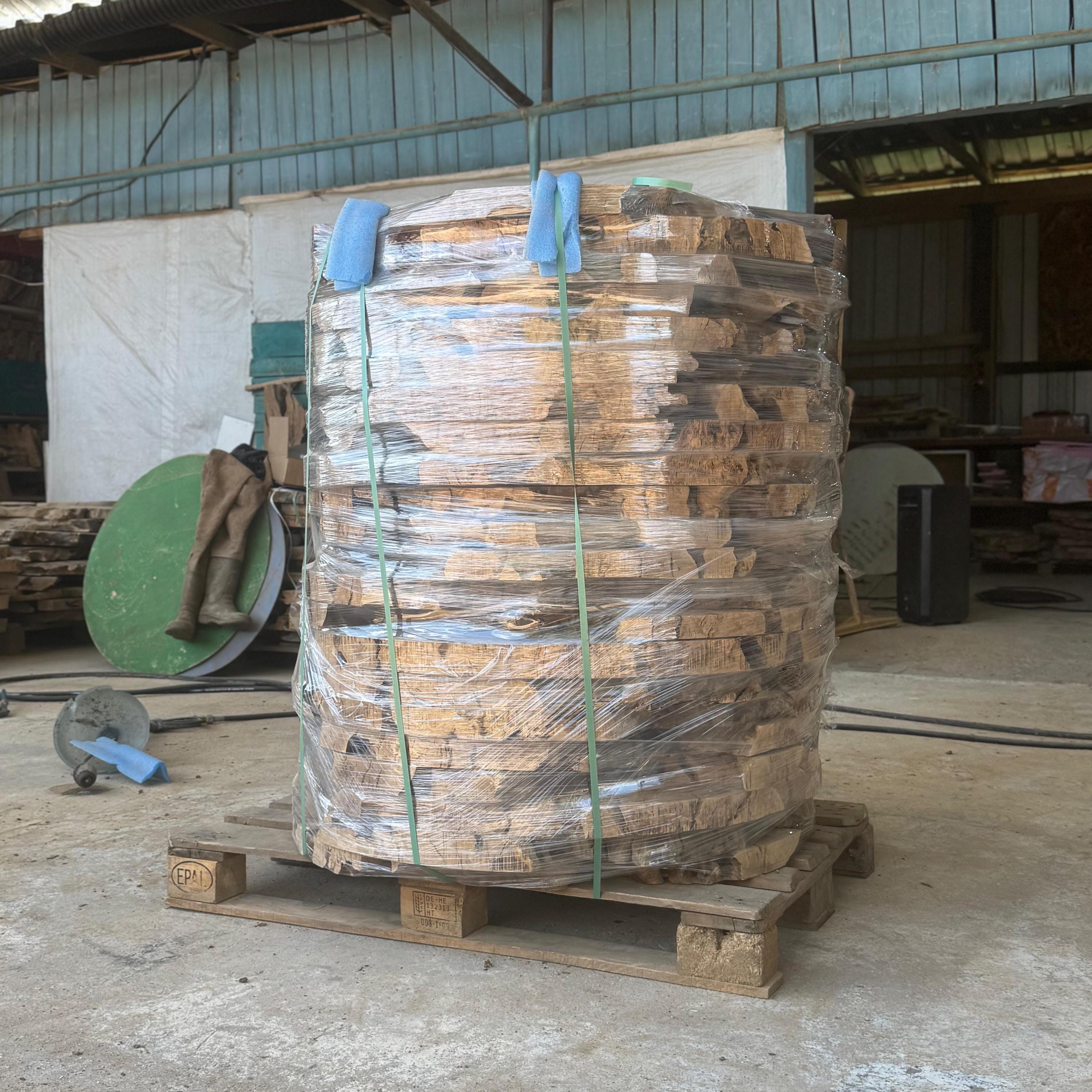
To compare wholesale olive wood prices, put every quotation on the same basis: the same unit, usable dimensions, preparation and delivery scope. Then divide the comparable cost by the sets or pieces that meet your intended use. The lowest price per supplied piece is only one part of that comparison. OliveWoodSlab welcomes wholesale enquiries for its olive wood product range. Send the material references, quantities, preparation requirements and destination to request a current wholesale quotation. A product-specific quote is more useful than applying one general price to different slabs, root slices and river sets.
Are you comparing pieces, sets or finished products?
Write the unit beside every price. One two-piece river set, one root slice and one finished tabletop are different units. If an offer contains ten two-piece sets, record both ten sets and twenty individual pieces so the comparison cannot drift between them. Compare supplied dimensions and surface condition as well. A larger outer outline does not necessarily provide a larger continuous area for your project. Our measurement guide explains why useful width and maximum width need separate attention.
What does cost per usable unit mean?
For this comparison, a usable unit is a set or piece that meets the project specification you have defined. It does not mean material outside that specification is defective; it may suit a different project. Keep the definition consistent when comparing offers. Comparable cost per usable unit = costs included in your comparison divided by the number of units that meet your specification. Here is a worked example using invented figures for arithmetic, not OliveWoodSlab prices. Suppose Order A costs $1,000 for 20 sets, of which 16 fit the planned product. Its cost for that use is $62.50 per suitable set. Order B costs $1,150 for 20 sets, all 20 suitable, giving $57.50 per suitable set. This assumes the same cost scope and no value assigned to the four sets outside the first specification. If those four sets can be used or sold elsewhere, account for that separately. Before buying, use a realistic estimate; after the first order, replace the estimate with your actual workshop results.
Which costs belong in your comparison?
- The wood, with the quantity basis stated.
- Preparation included in the quotation.
- Any additional work planned in your workshop.
- Packing and delivery charges included or separately quoted.
- Other destination costs you have independently confirmed.
Mark an unknown amount as unconfirmed rather than entering zero. Ask the supplier what the quotation covers and use the same destination and service assumptions for every offer. A wood-only figure and a delivered figure cannot be compared directly.
How does preparation change the result?
Record the work your team still needs to complete and estimate its time using your own process. Two offers may have different supplied thicknesses, face preparation or sanding stages. Review raw, prepared and finished wood before assigning the same workshop allowance to both. A pilot order gives you evidence for later comparisons: how many planned projects the material supported, how much preparation each required and which specification would improve the next batch. Keep those results with the supplier quote rather than relying on the headline unit price alone.
How do you ask for a comparable wholesale quote?
Use one line per product and give the requested dimensions, quantity, preparation, selection method and destination. The wholesale order specification template provides that structure. Choose the relevant olive wood formats, then send the same clear scope with your enquiry so the price can be assessed against the work you intend to make.