
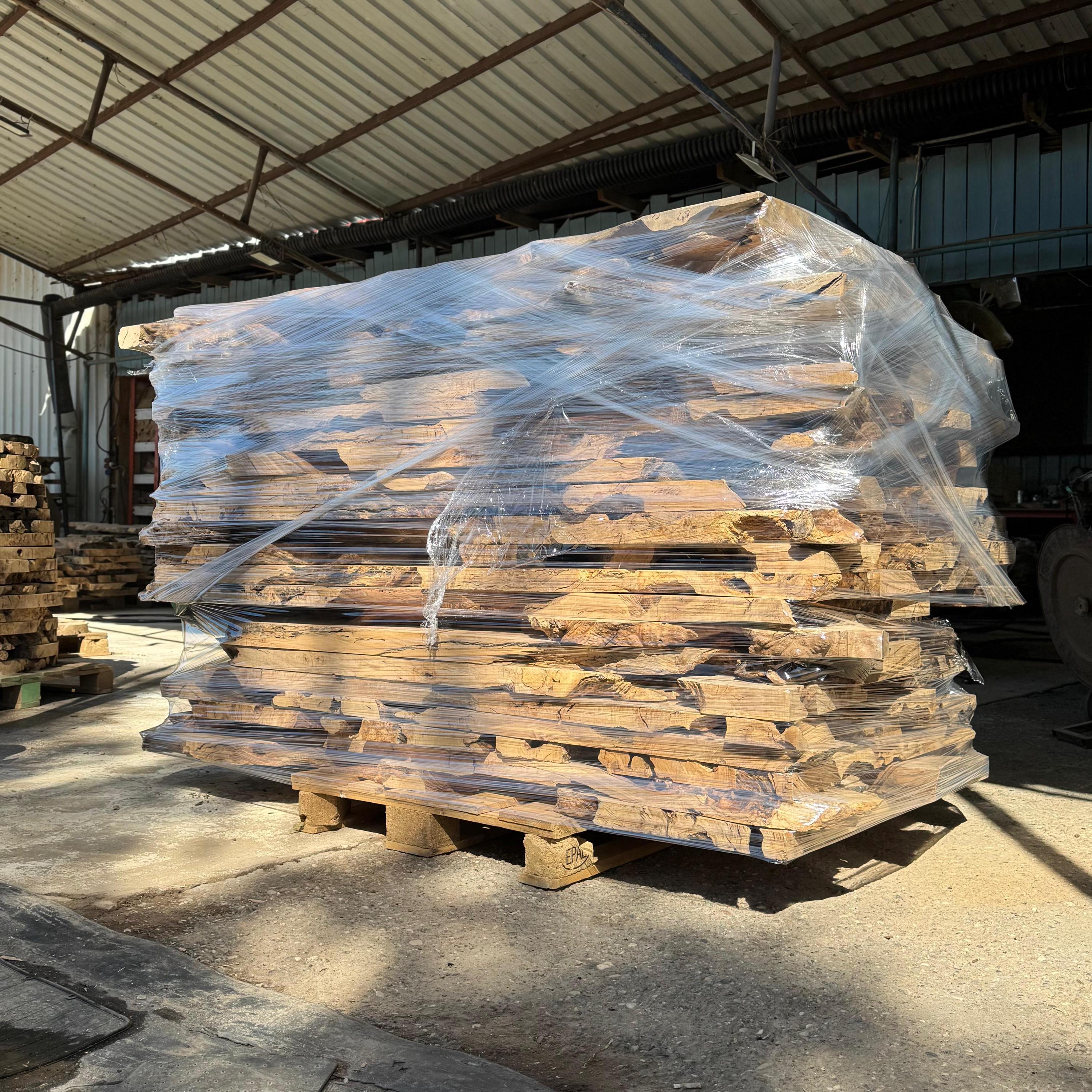
Furniture makers buying olive wood in bulk need an order specification that can be reused even when the individual grain and edges change. Define the finished product, the usable wood it requires and the preparation you want supplied. Keep those requirements together in one document for the first order and every reorder. OliveWoodSlab is a family woodworking business in Iznik, Turkey, supplying olive wood slabs, root slices, sets and furniture. Our workshop and product overview introduces the material range. For production enquiries, the most useful starting point is a drawing and a clear description of what your own workshop will do next.
Which dimensions need to stay consistent?
Separate essential production dimensions from visual preferences. The minimum useful length, the area needed for a particular top and the thickness after your planned preparation may be critical. The precise route of a grain line may be allowed to vary. Show the finished outline over the proposed wood layout. Mark areas required for hardware or support and any natural features you hope to retain. Ask for the supplied dimensions to be stated separately from your finished target; your maker should assess whether the selected material and preparation suit the design.
How do you specify workshop preparation?
Describe each stage in practical terms: drying, face flattening, sanding, edge treatment and any finish. OliveWoodSlab's workshop preparation methods include kiln drying, CNC flattening and sanding; the relevant listing or quotation defines which work is included for the material you select. Tell us whether your team intends to trim the outline, prepare a resin pour, sand further or apply the final finish. This makes it easier to discuss the handover point between the supplied component and your production process. Our raw, prepared and finished wood guide helps separate those stages.
What should a pilot batch test?
Use a manageable first batch to test the specification in your actual workflow. Record usable output, preparation time, layout adjustments and the material required for each finished item. Photograph the starting pieces and the results so the reasons for a revised specification are visible. A pilot is particularly useful when you are introducing a new furniture design. If your first layout needs more continuous wood around a mounting area, revise that requirement before increasing the order. A successful first piece is encouraging, while a documented process gives you a stronger basis for repetition.
What should a repeat-order record include?
- A product or project code and specification version.
- Required usable dimensions and agreed measurement basis.
- Preparation included and the work your team will complete.
- Acceptable variation in outline, openings and appearance.
- Quantity, requested timing and delivery destination.
- Lessons from the previous batch that affect the next one.
For example, use a revision note such as “Version 2: additional usable area required at the base fixing position.” Keep the supporting drawing with that revision. This is more precise than requesting the same wood again when the design has changed.
Can future batches look exactly the same?
Natural pieces have different grain and outlines. Build the furniture range around the characteristics you can describe and assess, while allowing room for individual character. Confirm availability and timing for each proposed order rather than treating a previous purchase as a standing supply commitment.
How do you start a production enquiry?
Send your furniture-production brief with drawings, the proposed first quantity and any expected follow-on demand. Keep that forecast separate from the quantity you are ordering now. Use the wholesale specification template to structure the material request, and include a relevant slab or set reference when you have one.