
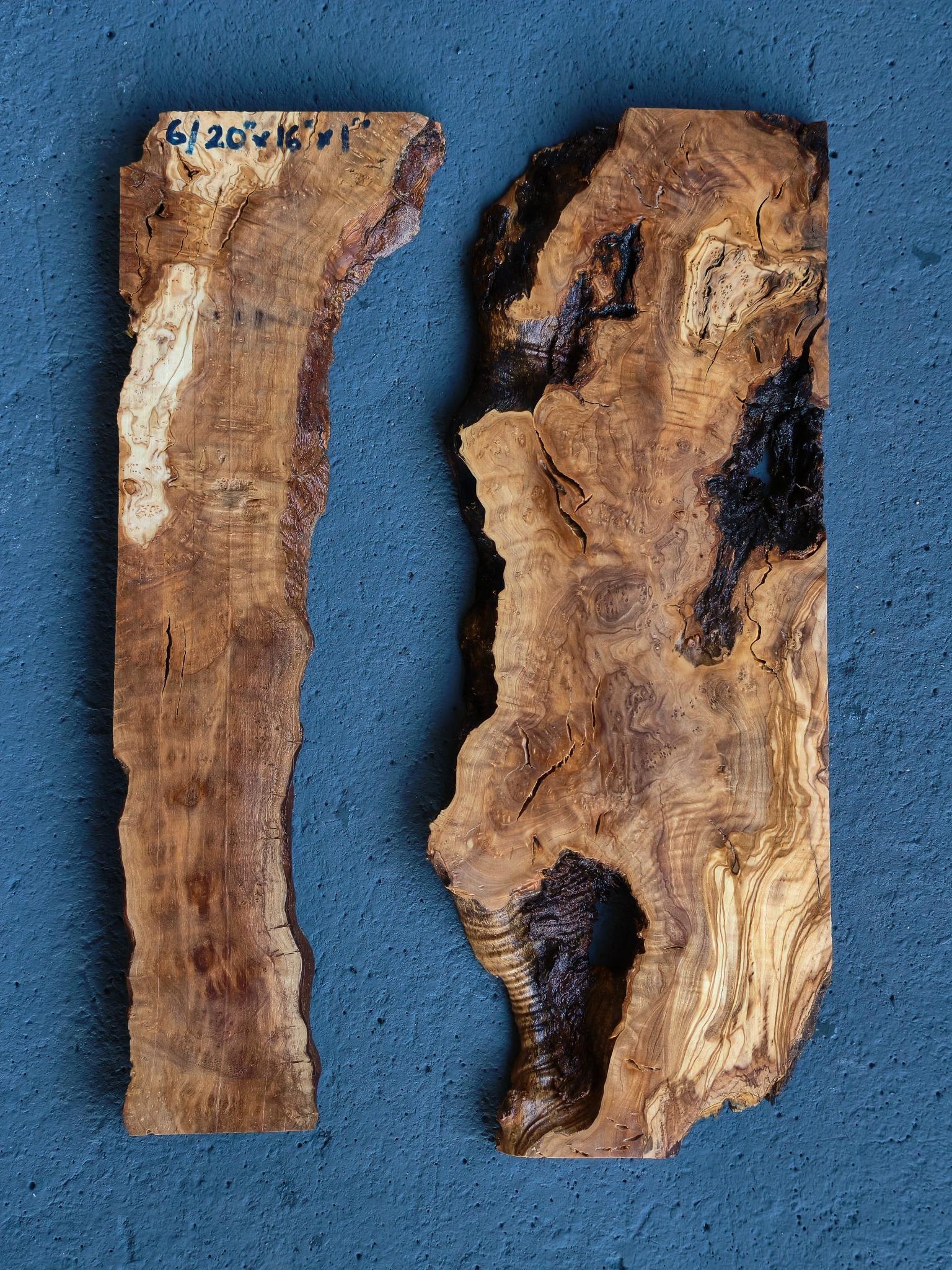
When an olive wood slab has visible cracks or openings, ask where they are, how far they extend and how they affect the intended project. A feature that suits a resin artwork may need a different treatment in a working tabletop. Make the decision using the actual piece, photographs of both faces and your maker's assessment. In the photograph, the two wood pieces have different outlines, visible surface lines and dark recessed areas. Those details help identify useful questions, but their colour and appearance alone do not establish depth, material condition or structural suitability.
What can a product photograph tell you?
A photograph can show where a visible feature sits in relation to the grain, edge or intended layout. It can also help you distinguish a broad opening from a fine surface line. Ask for an overview with a scale and a closer view of the area that matters to your project. A single face photo cannot reliably show whether an opening passes through the wood, whether a crack changes below the surface, or how the underside affects a fixing point. Request the missing view rather than estimating those details from shadows.
Which questions should you ask about a particular opening?
- Is it a shallow recess or an opening through the piece?
- What are its approximate dimensions and position?
- Is related preparation or filling already included?
- Can you see the same area from the underside and edge?
- Will it fall within the finished outline after trimming?
Number the features on a copy of the photograph and use those numbers in your enquiry. “Opening 2 near the proposed front edge” is easier to answer accurately than “the dark part.” Keep the original image alongside your marked copy so the details remain visible.
Should every opening be filled with epoxy?
That depends on the design and the specific wood. You might want an opening as part of a decorative composition, or a continuous surface where objects will sit. Discuss the intended result before specifying a treatment. A decision to fill an opening is not, on its own, an assessment of the piece's strength or suitability. For example, an opening inside a proposed tray footprint affects how that area can be used. The same opening outside the working area may have a different role in the composition. Mark the useful surface and any proposed fixing areas on the layout before making the choice.
How do cracks affect a buying comparison?
Compare the wood together with the preparation your maker expects for the chosen project. Two similarly sized pieces can involve different trimming, filling and finishing decisions. Read what raw, prepared and finished mean and record which stage each listing describes. If your project includes a base or hardware, ask the maker to assess the relevant areas before fixing positions are finalised. Avoid treating a general species description, a drying statement or an attractive face photo as a substitute for that assessment.
How can you make the enquiry easy to answer?
Start with a listing link, the intended use, finished dimensions and a marked photograph. State which openings you want retained and where you need a continuous surface. Check whether the listing shows an exact piece or example photographs, then send your questions about the selected wood. You can compare further options in the OliveWoodSlab collection.