
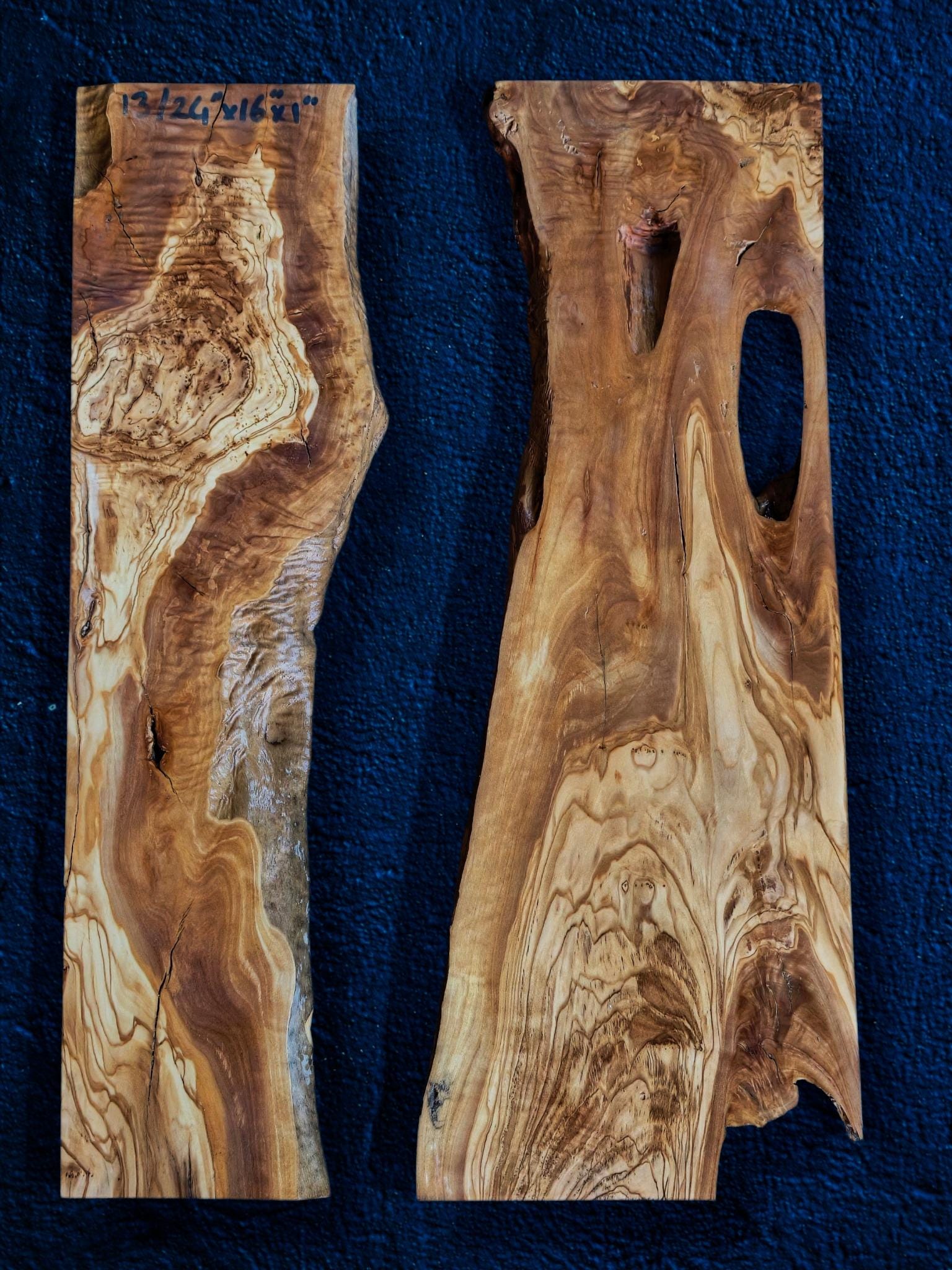
When you buy olive wood online, photographs answer two different questions: what does this wood look like, and which wood will arrive? Both matter, especially when a particular grain pattern or root outline is central to your design. Read the listing's photo description alongside its product options so you can choose with a clear understanding of the purchase.
What does an exact-piece listing mean?
An exact-piece listing identifies the actual piece or set being offered. Look for an explicit statement connecting the sale to those photographs, supported by the product code, dimensions and piece count where provided. This lets you plan around the visible outline and arrangement of that identified item. A code is useful for keeping records, but the written sale description supplies its meaning. Match the selected option to the pictured item and preserve the listing details with your project notes. This is particularly helpful when comparing several similar-looking slabs.
What do representative photographs show?
Representative photographs illustrate the kind of wood supplied under a listing. Your purchase follows the stated size, quantity and selection terms, while the individual grain and shape follow the actual pieces allocated to that order. Treat these images as a guide to the product category and read the description for the promised specifications. “Sample photo” also needs context: it may describe an illustrative image rather than a physical sample included in the order. The product noun, quantity and option selected should establish whether you are purchasing wood components, a sample product or something else.
How does selection before shipping work?
Some listings describe a selection process involving photographs of available pieces before shipment. In that case, follow the process stated for that product. Selection-based purchasing is distinct from buying a specific item already identified in the listing gallery. When evaluating a proposed selection, compare its overall outline, measured size, thickness and included pieces with your intended layout. Keep the product reference with any agreed selection so that the wood and the project remain easy to identify.
How should you use finished-project images?
A photograph of a completed epoxy table, mirror or styled object can demonstrate a possible use for wood components. Establish whether the photographed finished object is itself the product, or an example showing how the supplied wood could be used. For wood-only listings, base your purchase on the described pieces and preparation. For a tabletop or complete table, use the listing's stated scope to identify the finished surface and included components. A room setting helps with visual planning; the item description establishes the order.
Compare listings with a five-point check
- Which photo arrangement applies: exact item, representative example or selection before shipping?
- How many pieces are included in the selected option?
- Which measurements belong to each piece or to the complete layout?
- What surface preparation is stated?
- Does the purchase contain wood, a tabletop or a complete object?
Browse olive root pieces and river sets with these questions beside you. Choose a listing whose stated format matches your project, whether you want to design around a particular outline or work within a selected size range. For one unresolved detail, send the product reference and your question.