
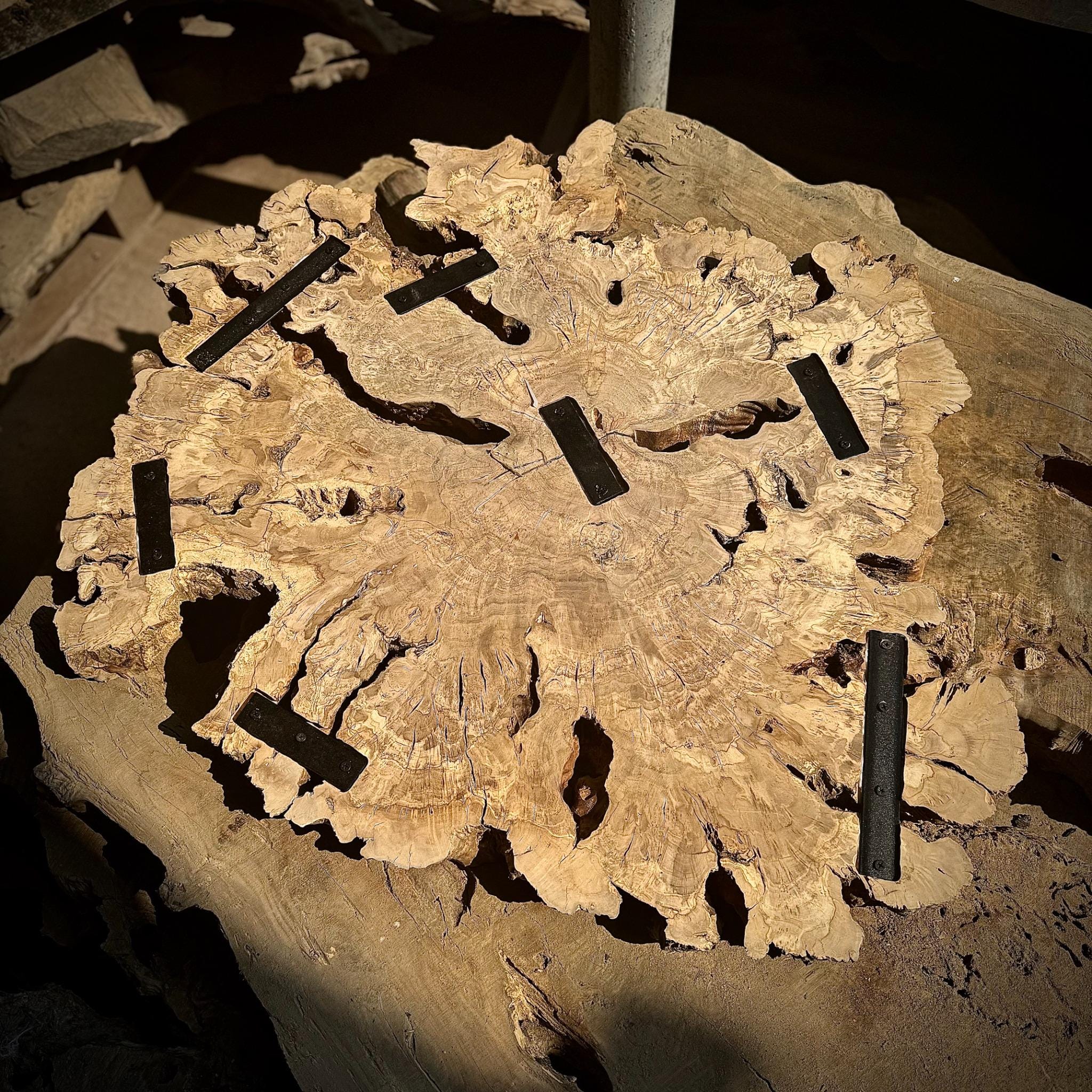
Buying olive wood for a project starts with one practical question: which stage of the work are you buying? A wood slab, a prepared component and a finished tabletop can share a similar shape while representing very different purchases. Understanding the surface condition and included components helps you choose a piece that fits your workshop, design and available time.
Start with the item being sold
First identify the product itself: a single slab, a multi-piece river set, a root slice, a tabletop or a complete table. Then read its preparation details. These are separate decisions. A sanded wood set is still a set of components, while a finished tabletop needs its own description of dimensions, surface finish and included parts. A styled room photo can help you imagine the result. The listing's written scope and selected option tell you what the purchase contains. For a complete table, look for clear details about the base as well as the top.
What does raw olive wood mean?
Treat “raw” as a starting point for checking the description. Look for the actual condition of the faces, edges and surface. Is the wood supplied as cut? Is flattening described? What preparation remains for your intended design? Raw and kiln-dried describe different things: one concerns the supplied condition, and the other identifies the drying process. OliveWoodSlab's olive wood is kiln-dried; each product listing explains the preparation offered for that particular item.
What does prepared wood include?
Prepared olive wood may have specific operations listed, such as CNC flattening, edge cleaning or sanding. Read which operations apply to your selected option. Where a sanding grade is stated, use that product's figure rather than transferring a number from another listing. Also distinguish one prepared face from two, and the listed slab thickness from the dimensions of your planned finished object. Choosing a prepared component lets you plan around the work already described while keeping cutting, joining and finishing requirements tied to your own design.
How should you read finished or oiled surfaces?
An oiled wood surface and a completed piece of furniture describe different levels of completion. Look for the named surface treatment and the included components. The listing should separately identify furniture completion and the surface treatment so you can assess both for your next process. For an epoxy project, match the supplied surface to your chosen resin manufacturer's instructions. Raw wood and an oiled surface require different consideration; compatibility depends on the stated surface condition and the requirements of your chosen product. WEST SYSTEM's surface-preparation guidance explains why the condition of the bonding surface matters.
Use this quick buying checklist
- Identify the product type and number of included pieces.
- Read the dimensions and thickness for the selected option.
- Note the preparation applied to each relevant face.
- Check whether oil or another finish is stated.
- Match the remaining work to your intended project.
Choose your starting point in the OliveWoodSlab shop, or explore olive wood river sets for a design built around multiple wood components. Compare the actual listing details to your checklist and select the option that matches the work you want to do.