
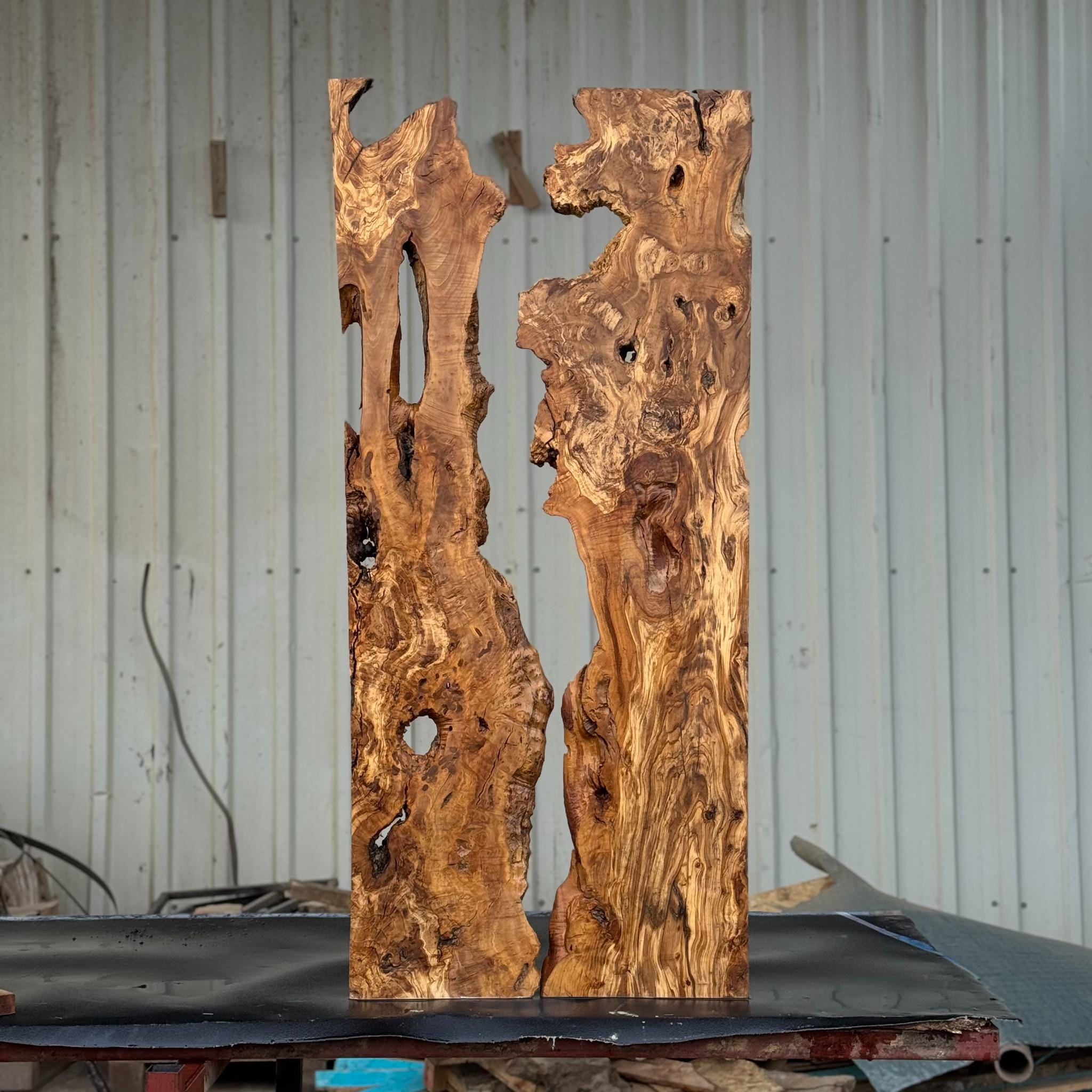
An olive wood console table can bring distinctive grain into an entrance, hallway, or living room. The best starting point is the space around it: where people walk, what the top will hold, and how its outline relates to the wall. A narrow furniture project needs a clear brief before you choose a slab.
Start with the room and your daily routine
Mark the proposed footprint on the floor with paper or removable tape. Open nearby doors, pull out drawers, and walk through the space while carrying the items you normally bring home. This simple exercise helps you judge the depth and position in the actual room. List what the console will hold. A lamp, tray, framed picture, and storage basket each need a place. Sketch their positions so the furniture serves your routine as well as the room's appearance.
Choose the outline before the wood
A straight rectangular top gives you a defined footprint. A natural edge introduces changing depth along the length. When reviewing an irregular slab, compare its narrowest and widest areas with the space you marked, and ask which measurement points the listing describes. For a river-style design, specify the complete tabletop outline separately from the dimensions of its wood pieces. The proposed arrangement and epoxy area belong in the same drawing. A photograph of an attractive set helps with selection, while a dimensioned layout explains the console you want to make.
Plan the grain and the viewing angle
Think about how you will first see the console: straight ahead from the doorway, from the side, or from above beside a staircase. Compare candidate pieces in that orientation. A phone screenshot rotated to match your layout can make different grain directions easier to assess. Mark the preferred front edge and the position of any prominent opening or contour on the reference image. If the photo shows an example rather than the exact pieces offered, ask how the wood selection will be confirmed.
Include the base, cables, and access
Draw the proposed base beneath the top so its position can be discussed with the maker. Show any storage, radiator, socket, or skirting board that affects placement. Include the intended overall height as well as the tabletop thickness. For a lamp or charging area, mark where cables enter and leave the furniture and how you will reach the socket. Keep base design and attachment details in the project discussion; the photograph of a tabletop alone does not define the complete furniture.
Turn the layout into a clear enquiry
Copy this short specification when comparing wood or requesting a project quote:
- Room and intended use:
- Finished top length, depth, and thickness:
- Overall furniture height:
- Preferred outline and front edge:
- Selected listing link or product code:
- Wood only, tabletop, or complete console with base:
- Epoxy appearance and surface finish:
- Socket, storage, and access requirements:
- Delivery destination:
OliveWoodSlab supplies Turkish kiln-dried olive wood from Iznik. Preparation and what is included vary by listing. Explore larger olive wood pieces for your layout, then send your console brief with the relevant product links.