
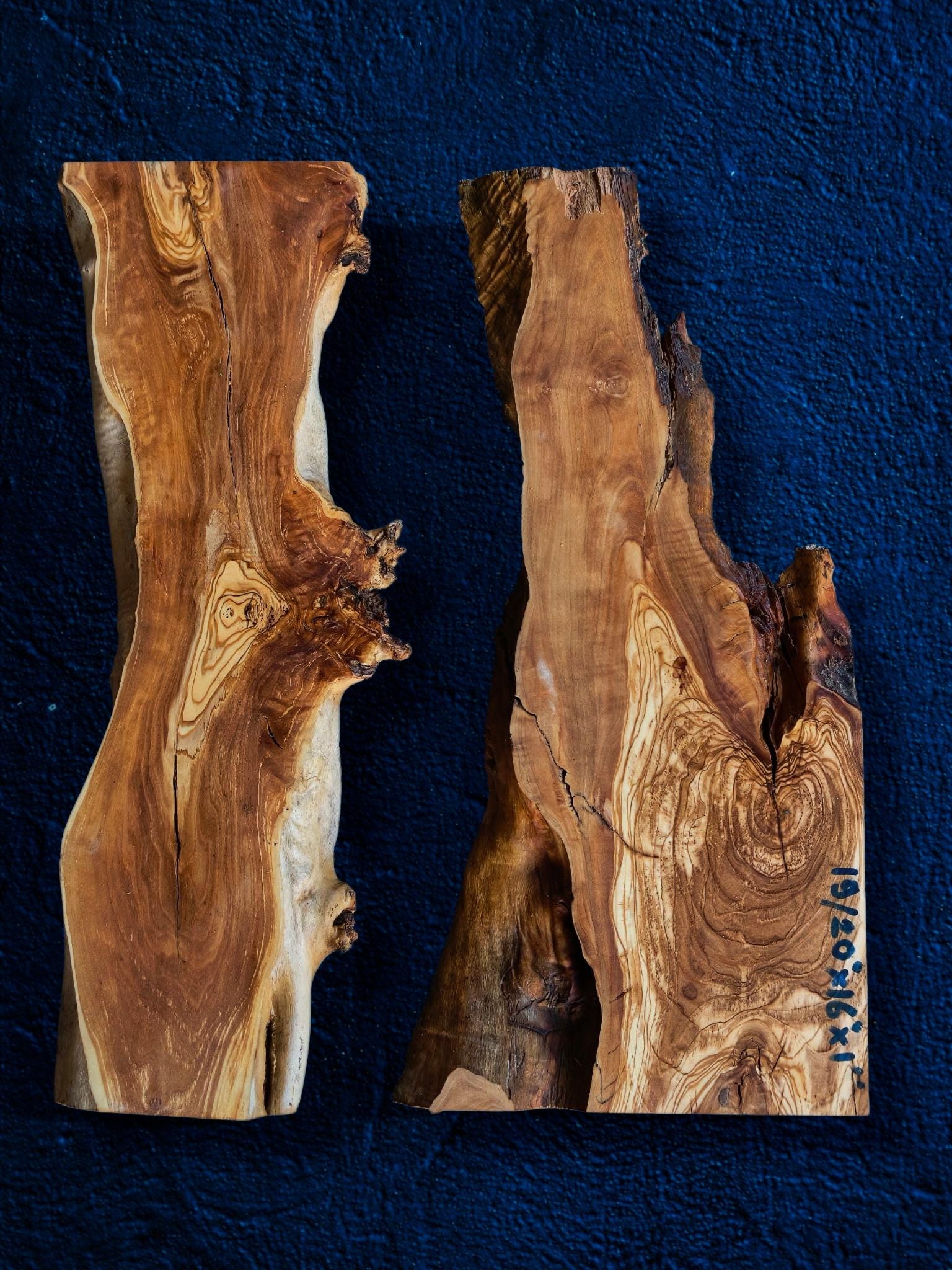
An olive wood river table begins with a layout decision: how should the wood and the centre channel work together? The right choice depends on your planned tabletop, the shape of the edges and the details of the individual listing. Comparing those points first makes it easier to select a set with confidence.
Start with the layout you want to see
Think about the balance between wood and the centre channel. A narrow channel draws attention to the relationship between the two edges. A wider channel gives the space between them a stronger role in the design. Neither layout suits every pair: the curves and changes in width influence the result. Sketch the intended tabletop outline, then place the wood shapes inside it. Keep the outer edges and the centre-facing edges distinct so you can see where the natural contours will remain visible.
Compare river sets and bookmatched pairs
A two-piece river set gives you two pieces to arrange around a channel. A bookmatched pair is specifically selected for its related, mirrored grain arrangement. Read the product description to understand which type is offered; two pieces photographed together are not automatically a bookmatched pair. Look at both the grain relationship and the edge shapes. A visually balanced arrangement can have different contours on each side, while a bookmatched pair may give the grain a more deliberate relationship across the centre.
Check the dimensions behind the photograph
Identify the listed length, thickness and width information for the wood itself. Then establish whether a displayed width describes one piece, both pieces together or the complete photographed arrangement. A centre gap can change the overall layout width without changing the amount of wood supplied. For irregular edges, compare measurements at several positions where they are provided. This helps you judge how the pieces fit your intended outline, especially where an edge narrows or curves inward. Our large olive wood selection offers another starting point when your design calls for a broader individual slab.
Understand what the photographs represent
Check whether the listing offers the photographed pieces or uses photographs to show a product type with a selection process. Follow that listing's stated terms. A finished table shown as an application example also needs to be distinguished from the wood included in the purchase. Use detail photographs to study grain, openings and edges. Read the written preparation information alongside them; an attractive surface photograph alone does not establish which finishing services are included.
Compare preparation and purchase details
OliveWoodSlab supplies kiln-dried olive wood from Türkiye. Surface preparation varies between products, so use the individual listing to check flattening, sanding, cleaning and any available finish options. Connect those details to the work you intend to carry out after delivery.
- Confirm the supplied number of pieces.
- Match the dimensions to your planned layout.
- Check whether the photographs show the supplied pieces or a selection example.
- Review the preparation and finish included in the selected option.
- Read the current delivery information for that product.
Browse olive wood river sets to compare available layouts. Choose from the stated listing options, or contact OliveWoodSlab for a project-specific question that the product details do not answer.