
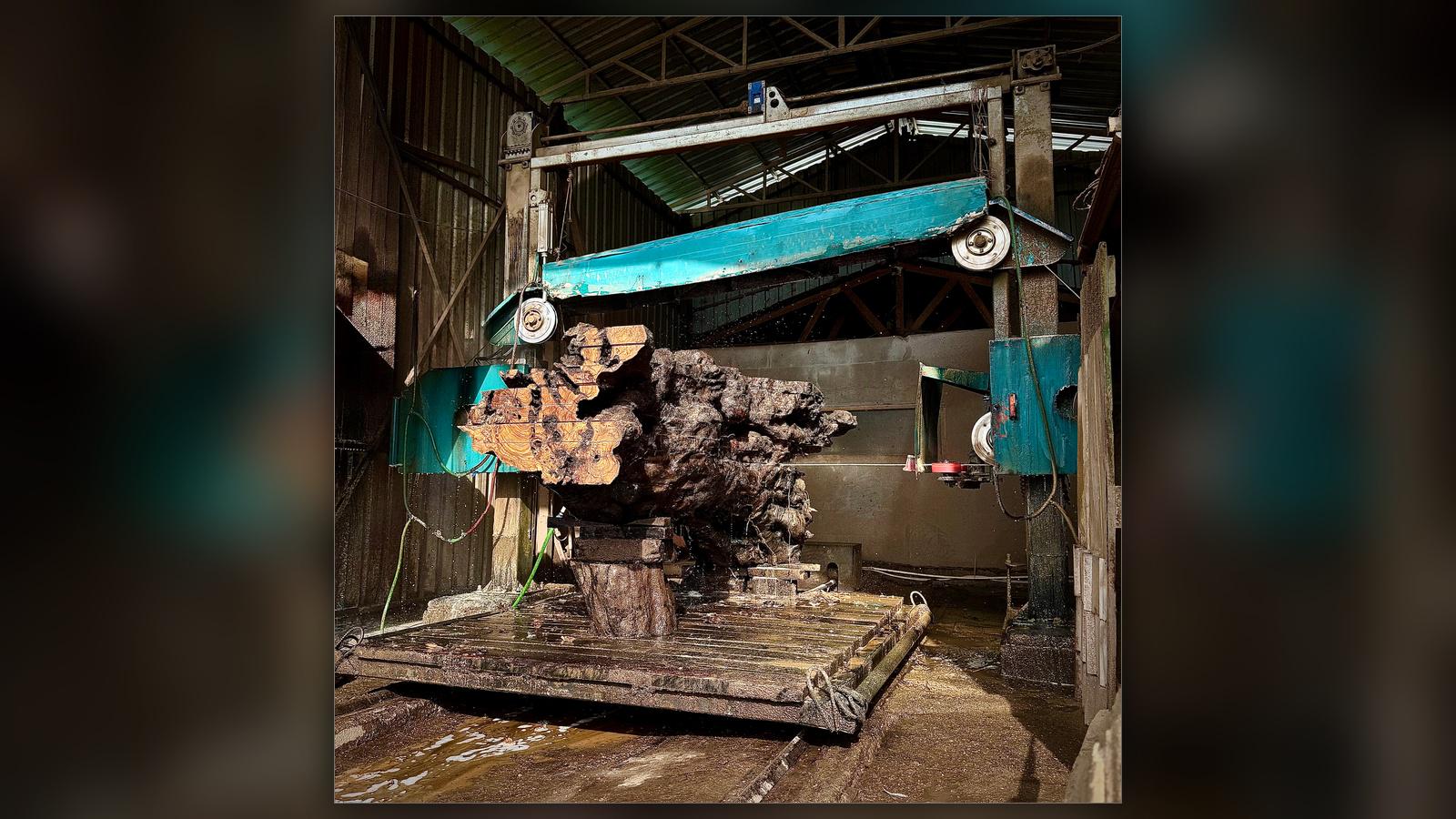
Sustainable olive wood is not a label that should be applied automatically. The environmental story of any slab depends on where the wood came from, why the tree or branch was removed, how it was dried, how far it travelled, and how the finished object will be used. A beautiful material becomes a more responsible choice when these questions are considered together.
Start with the Source
Olive wood may come from pruning, orchard renewal, storm damage, natural loss, or other removal decisions. These routes are not identical, and a buyer should not assume that every piece is reclaimed or salvaged. Look for clear seller information and ask what is known about the wood’s origin. If documentation is limited, the description should say so instead of making a broad environmental claim.
Consider Processing and Transport
Turning a heavy, irregular trunk into a stable slab takes energy and time. Sawing, drying, storage, packaging, and shipping all add to the material’s footprint. Air drying may use less direct energy but takes longer and still requires careful management. Kiln drying can improve control but uses equipment and energy. Neither method is automatically best in every situation.
Design for a Long Useful Life
Durability can support sustainability when a slab becomes a well-made object that is kept, repaired, and refinished instead of quickly replaced. Good joinery, an appropriate finish, and a design that allows natural wood movement can extend useful life. Choosing the right dimensions at the start may also reduce unnecessary cutting and waste.
Questions to Ask Before Buying
Ask about the source country, reason for removal when known, drying method, current moisture information, repairs, finish, packaging, and shipping route. Consider using local fabrication and saving suitable offcuts for smaller objects. These practical choices are more meaningful than a single “eco-friendly” label. Explore the available Turkish olive wood slabs. Review each piece on its own details and choose a slab that fits both your design and your sourcing priorities.