
A Bed No One Could Move
After twenty years away—from the Trojan War through years of wandering—Odysseus finally returns to Ithaca. Yet Penelope does not accept appearances as proof. In Book 23 of the Odyssey, she tells Eurycleia to set their marriage bed outside the chamber. Homer explicitly says she is testing her husband. Odysseus reacts at once: no mortal could easily move that bed. A strong olive tree had grown in the courtyard, its trunk as thick as a pillar. He built the room around it, removed its branches, carefully dressed the trunk, and fashioned it into a bedpost. Unless someone cut through the tree at its roots, the bed had to remain where he made it.
Craftsmanship as Proof
Odysseus’ reply is full of a maker’s details: an adze, a straight line, an auger, inlays of gold, silver, and ivory, and purple ox-hide straps. This is more than a password. He remembers how their shared home was built, and Penelope recognizes knowledge only the true maker—and her spouse—could possess. One detail matters: Homer does not say that the entire bed was carved from a single tree. The rooted trunk became its central post and its immovable secret. Modern retellings often simplify the scene.
Why an Olive Tree?
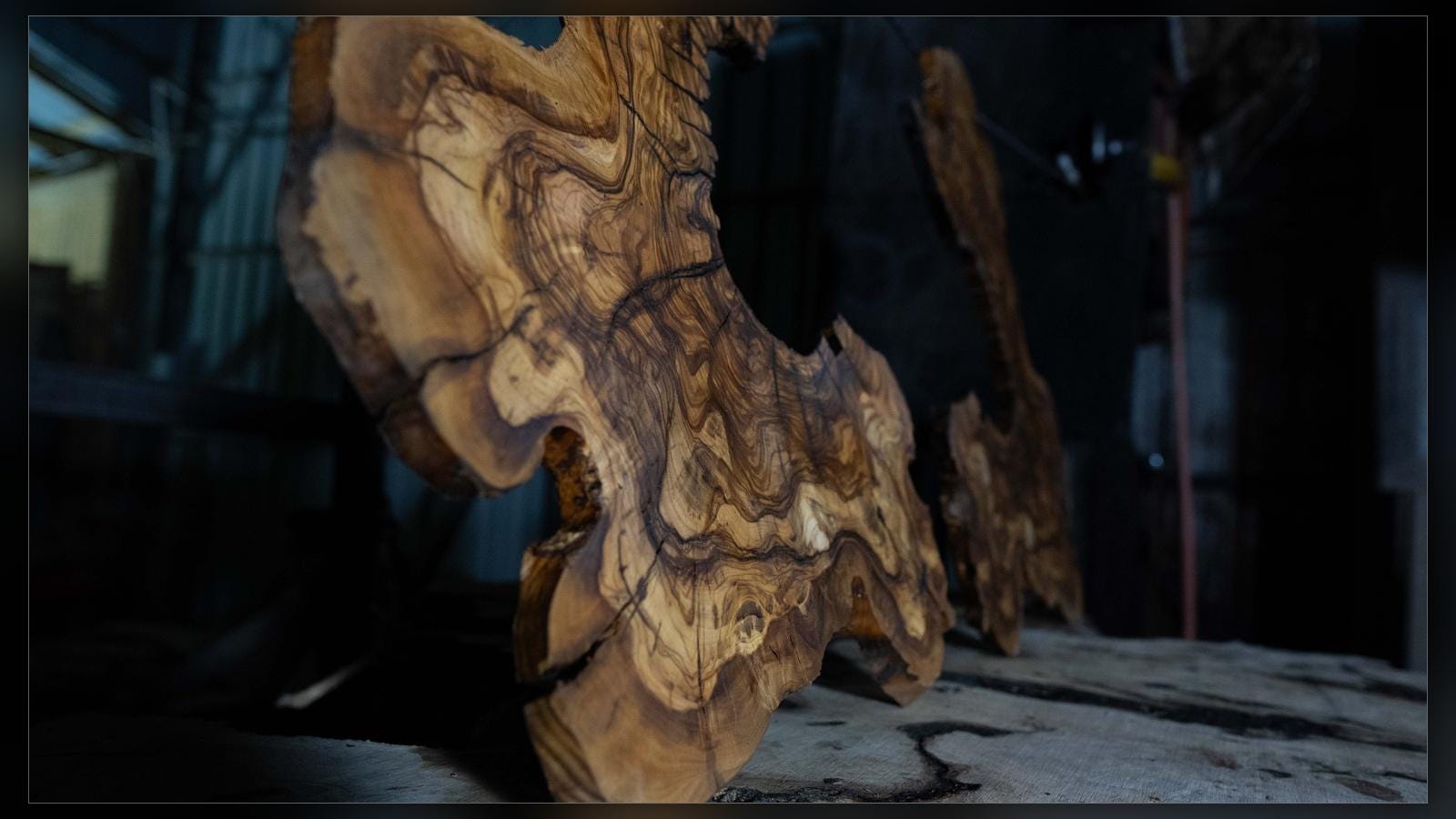
The poem never pauses to give the tree one official symbolic meaning. Still, the rooted olive offers a powerful image of endurance, continuity, and home. Those are thoughtful interpretations, not words Homer places in a character’s mouth. Olive wood appears elsewhere in the Odyssey. Calypso gives Odysseus a bronze axe with an olive-wood handle in Book 5. In Book 9, he turns the Cyclops’ green olive club into the stake used in his escape. One plant moves through craft, survival, and care.
A Homecoming Rooted in Memory
The final recognition does not depend on battle fame. It rests on a domestic object, skilled hands, and a memory shared by two people. After sea voyages, monsters, and disguises, the wandering hero is known through a bed that cannot wander. That reversal makes the olive-root scene one of the epic’s quietest and most moving climaxes. Explore handcrafted olive-wood pieces inspired by enduring Mediterranean stories.